
Mold Remediation Checklist: What Most Companies Miss (And Why You Might Still Get Sick)
It's Mold Season — And Your Home's Small Maintenance Gaps Are Part of the Problem
It's July. Which means it's mold season.
Humidity's up. AC units are running nonstop, sweating condensation into places nobody checks. Cars sit in driveways getting cooked and then rained on. Roofs that held fine in April are suddenly not holding in June. And it's not just the obvious stuff — this is also the season your home's smaller maintenance items start failing without you noticing. Stucco cracks. Window seals and caulking that spent months expanding and contracting under direct sun finally give up and let moisture in. Nobody thinks to check a window seal. But the sun beating down all summer is exactly what breaks it down, and a broken seal is an open invitation.
If you've been symptomatic and can't figure out why the last few weeks have felt worse — this is why. Your environment didn't get more toxic overnight. It's just the season mold grows fastest, and your body knows it before your brain catches up.

Why Having the Right Remediation Team Isn't Optional
Having the right remediation team isn't a nice-to-have next to your supplements and your binders. It is the foundation everything else sits on.
And it's not only about who you hire. It's also about what you do — or don't do — while the work is happening. If you're a homeowner living through remediation, containment matters. Sealing off the work area, not tracking contamination through the rest of the house, not opening up containment early because you're impatient to get your space back. I've seen people hire the right team and then undo their own progress by not respecting the containment. Protecting the boundary while the work is happening is just as important as the work itself.

What $80,000 in Remediation Taught Me
I learned this the expensive way.
We spent $80,000 trying to remediate a home. It wasn't enough. Not because remediation doesn't work — because the wrong remediation, done by people who don't understand what "safe" actually means for a sensitized body, doesn't work. Part of what we didn't know then: it's not enough to remove what's visibly contaminated. Skip the small particle cleaning, or leave one section of carpet or porous material behind because it "looked fine," and that's exactly the thing that keeps you sick. Spores and fragments don't need much to hide in and keep reseeding the air.
A building can pass a standard inspection and still be actively making a CIRS patient sick. "Passed inspection" and "safe for someone with mold illness" are not the same sentence. I wish someone had told me that before we wrote that check.
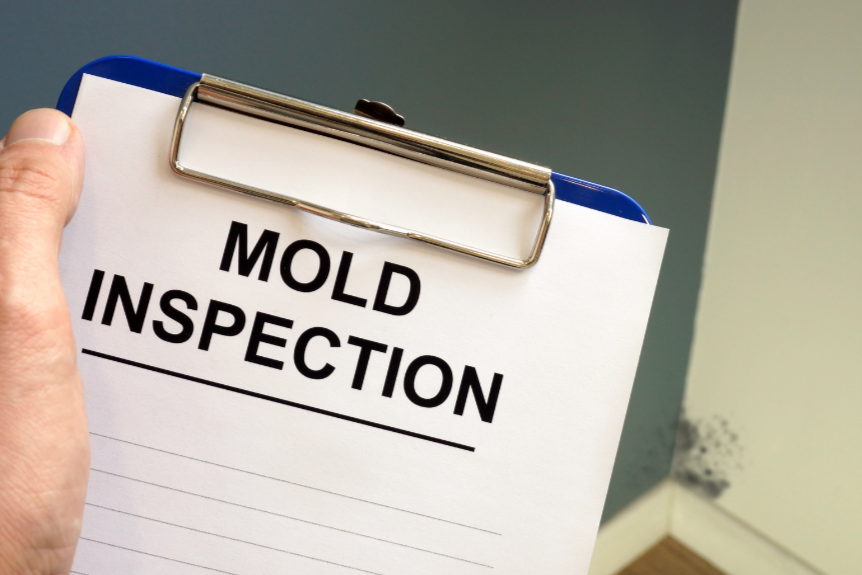
The Checklist Question to Ask Any Remediation Company
This is the piece almost nobody puts on the checklist: your practitioner and your remediator have to be working from the same understanding of what "clean" means. Most IAQ testers and remediation companies are trained to a standard that has nothing to do with what a genetically susceptible, already-inflamed body can tolerate. They're solving for "passes code." You need someone solving for "safe for this specific person." Those are different jobs, and most companies are only equipped to do the first one.
If you're in the middle of remediation right now, or you're about to start, here's what I'd be asking:
Has this company worked with CIRS or mold-illness patients specifically, not just general water damage?
Are they testing post-remediation, not just assuming the work is done because the visible mold is gone?
Do they understand that "dry" and "clean" are not the same thing?
If the answer is no across the board, you don't need a new binder. You need a new team.

Why Small Particle Cleaning Is Its Own (Often Skipped) Step
Here's the piece that trips up even the people who did everything right: finding the mold and removing it is not the same as being clean. Visible mold gone doesn't mean the spores and spore fragments are gone. Those particles are small enough to stay airborne, settle into fabric, HVAC systems, and porous surfaces, and keep triggering a reaction in a sensitized body long after the source is physically removed.
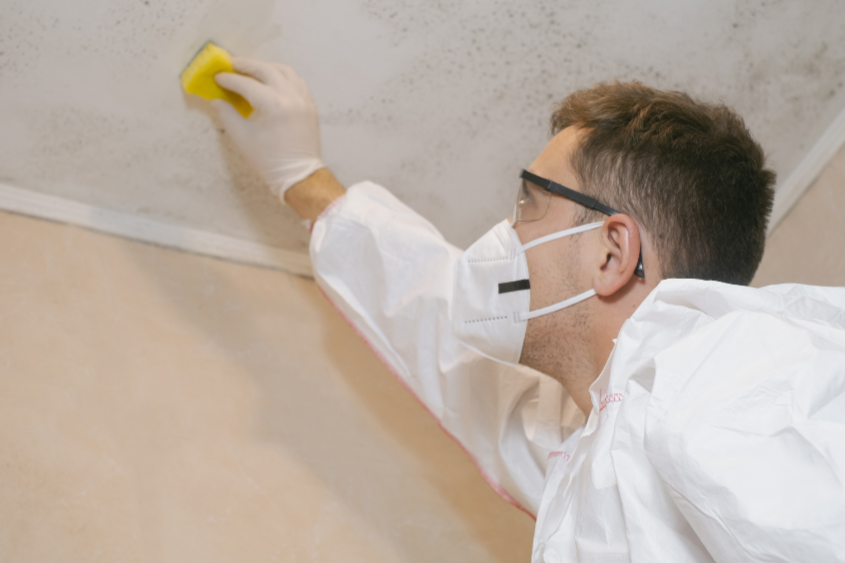
Small particle cleaning is its own very important step, separate from remediation itself, and it's one of the most commonly skipped parts of the whole process. And for sensitized people, this is not a DIY job — doing this cleaning yourself is one of the fastest ways to re-expose your own body to what you're trying to get out of your space.
This is exactly why testing post-remediation matters so much. Not just "is the mold gone," but "is the air and the dust in this space actually clean now." Those are two different questions, and only one of them usually gets asked.
The Reservoir Almost Everyone Forgets: Your Sinuses
The sinus cavity is one of the most overlooked reservoirs in this whole picture. Mold and MARCoNS colonize there and quietly reseed the rest of the body, even after everything else — the home, the protocol, the binders — is finally working. Sinus rinsing is one of the most underused tools in the mold world, and there's a right and a wrong way to do it for a mold-sensitized person. If you've fixed your home, fixed your gut, fixed your drainage, and you're still not fully clearing — this is worth a hard look.

Healing Happens in Layers
Here's the thing I keep coming back to, fifteen years into this work: healing happens in layers. You fix one thing and it reveals the next thing underneath it. The home. The gut. The nervous system. The sinuses. The team around you. None of these are optional extras — they're all part of the same terrain, and skipping one means the rest of your work has somewhere to keep leaking out of.
Stay tuned to my Instagram this week — I've got more coming on mold, mycotoxins, and chronic illness that goes deeper into all of this.
If any of this hits close to home — the remediation piece, the sinus piece, or just the exhaustion of not knowing which layer you're even on right now — reach out. Or comment MOLD on Instagram and I'll point you toward what to do next.
You're not crazy. And you're not doing this wrong. You just might be missing a piece nobody told you to look for.
With love, relentless healing, and a whole lot of grit,